
Office furniture
Desks, office chairs, conference tables, cubicle panels, reception furniture, and breakroom furniture.
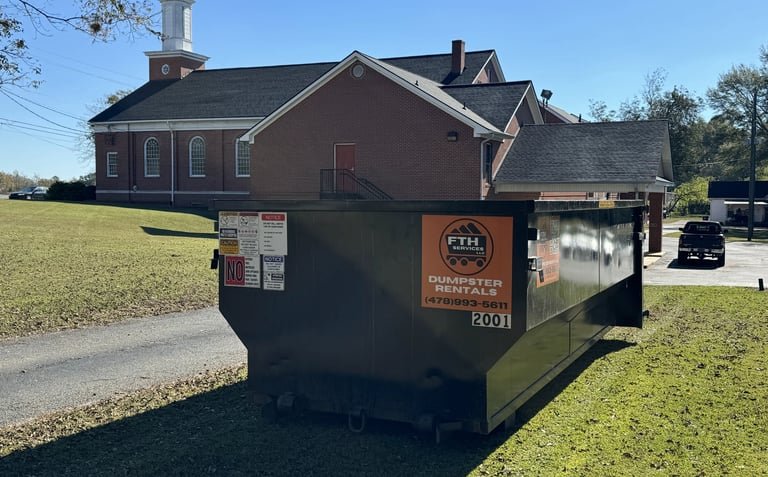
Temporary roll-off dumpsters for small business, rental property, office, and light commercial cleanup when the job fits our service area and material rules.
Business cleanups need to happen without blocking customers, tenants, employees, deliveries, or daily operations. That is why placement and timing matter as much as the dumpster size.
FTH works with offices, retailers, landlords, property managers, and small businesses that need debris gone without turning the site into a bigger problem. Commercial jobs often involve furniture, shelving, tenant debris, fixtures, packaging, and light renovation material, so the plan should be clear before the container arrives.
Commercial jobs need clear access and predictable timing. Offices, retail spaces, warehouses, storage units, and tenant cleanouts often include bulky items that fill the container quickly. However, file boxes, records, shelving, and equipment can also add weight fast.
Before delivery, confirm where the dumpster can sit without blocking fire lanes, customer parking, loading docks, sidewalks, mail routes, or neighboring businesses. If the property has gates, delivery windows, or management rules, include those details when scheduling.
Keep electronics, hazardous material, liquids, batteries, and appliances with refrigerant out of the container. Also, keep the pickup route open on the scheduled removal day so the truck can reach the dumpster without a delay fee.
Desks, office chairs, conference tables, cubicle panels, reception furniture, and breakroom furniture.
Display racks, shelving, counters, signage, packaging, and non-hazardous store cleanout debris.
Empty filing cabinets, boxes, records, and storage-room material. Paper is dense and can add weight quickly.
Abandoned furniture, fixtures, packaging, shelving, and general cleanup material from leased spaces.
Pallets, cardboard, shelving, light equipment, packing material, and non-hazardous inventory cleanup.
Flooring, trim, doors, drywall, cabinets, and fixtures from small business or office renovation work.
Commercial cleanup can include office furniture, shelving, fixtures, packaging, non-hazardous tenant debris, light renovation material, and bulky abandoned items. Businesses should review electronics, liquids, batteries, appliances with refrigerant, chemicals, and unusual inventory before loading because some materials require special handling or cannot be hauled in a standard roll-off dumpster.
Use these estimated weights for planning only. Standard rentals include 1 ton of disposal weight, and weight over the included amount is billed at $75 per ton, prorated.
| Common item or material | Typical planning weight | Dumpster planning note |
|---|---|---|
| Office chair | about 25–60 lb each | Bulky but manageable; stack only when safe. |
| Desk | about 75–250 lb each | Solid wood and metal desks weigh more than laminate desks. |
| File cabinet | about 40–200 lb each empty | Remove files before loading; paper weight adds up fast. |
| Retail shelving section | about 40–150 lb each | Break down when practical to reduce wasted space. |
| Pallet of packaging / cardboard | varies widely | Dry cardboard is light; wet cardboard can gain weight quickly. |
| Tenant debris / mixed items | varies widely | Mixed loads should be reviewed before ordering when electronics or appliances with refrigerant are present. Appliances without refrigerant can be loaded at the rear barn doors. |
| Cubicle panels | about 35–100 lb each | Bulky panels can waste space if not stacked neatly. |
| Breakroom appliances without refrigerant | about 30–180 lb each | Keep appliances with refrigerant out. Place allowed appliances at the rear doors. |
| Carpet tile / office flooring | varies by square footage | Dense flooring can add weight quickly, especially when wet. |
| Pallets | about 30–70 lb each | Break down when practical to reduce wasted space. |
These are planning estimates only. Actual scale weight varies by size, moisture, material density, brand, construction method, and how the load is packed. FTH Services uses disposal facility weight tickets for final billing when overage applies.
Works for smaller office cleanouts, back-room cleanup, packaging, and limited fixture removal.
Fits tenant turnovers, retail resets, property-management cleanup, and medium-volume business debris.
Useful for larger commercial cleanouts, bulky furnishings, renovation debris, and projects where loading room matters.
Choose a location that does not block customer parking, fire lanes, loading areas, tenant access, delivery routes, sidewalks, or neighboring businesses.
Schedule delivery around business hours, tenant move-out dates, contractor work windows, and pickup needs so the container is onsite only when useful.
Commercial debris can vary. Keep electronics out of standard dumpster loads unless proper disposal has been confirmed. Load mattresses first, standing vertically on the long edge when possible. Appliances with refrigerant are not accepted. Load appliances without refrigerant at the rear barn doors so they can be accessed at disposal. Plan unusually heavy debris before loading. Do not load liquids, chemicals, batteries, tires, concrete, dirt, brick, rock, heavy fill, or tree stumps in a standard dumpster.
Commercial dumpster rentals work for office cleanouts, retail cleanup, tenant turnovers, property management jobs, warehouse debris, and light renovation debris when the material fits FTH loading rules.
A dumpster can be placed at a business when the placement area has safe truck access and does not block customer parking, fire lanes, neighboring access, or required business traffic routes.
Businesses should confirm placement rules, truck access, loading schedule, material type, and whether the dumpster can remain on site during the rental period.
These blog articles support this service with practical loading, cost, and planning guidance.