
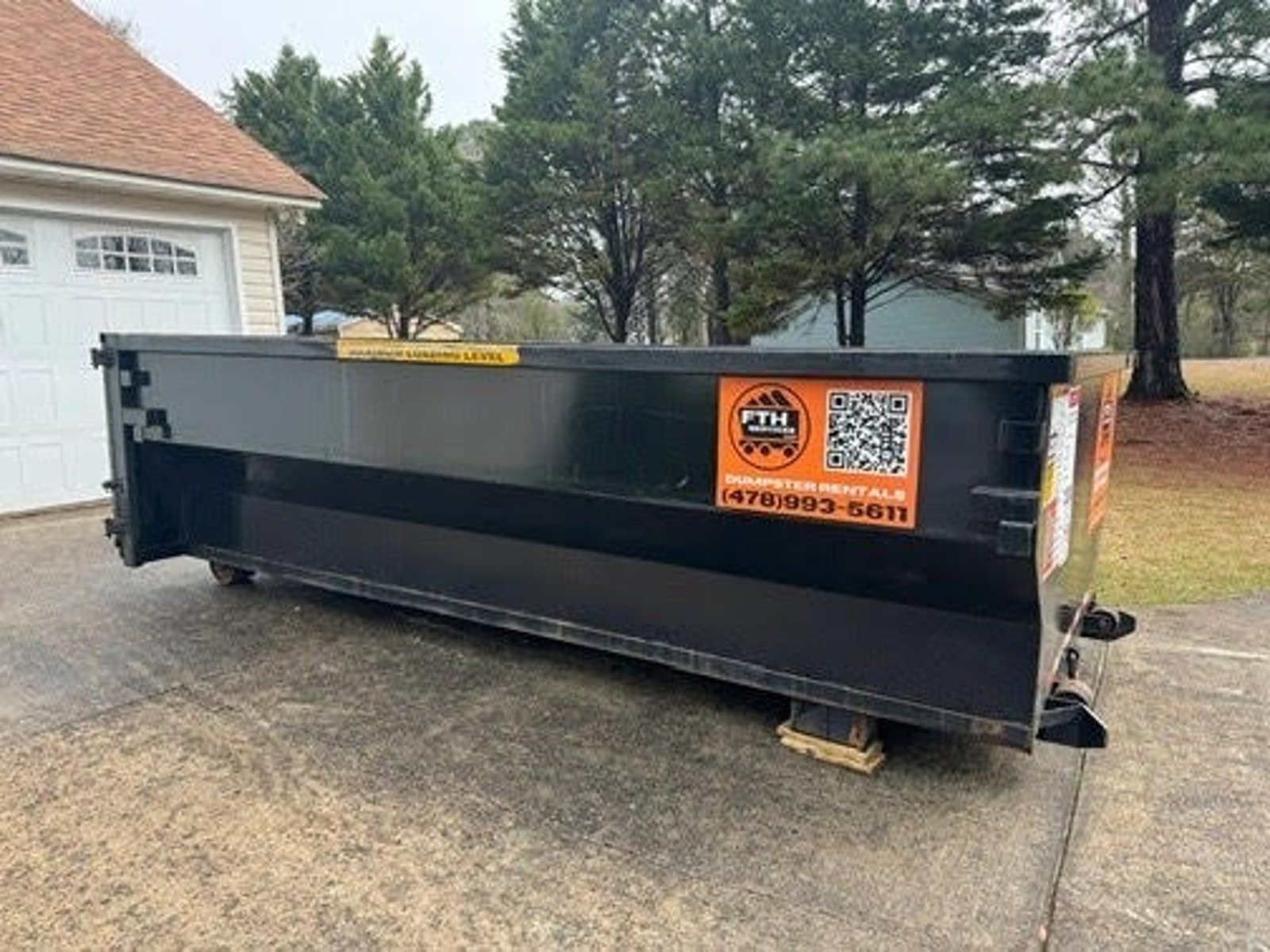
Dumpster vs chipper decision
Use a dumpster for mixed yard cleanup. Use a chipper when the load is clean limbs only and you want mulch.
Yard debris should be recycled or reused when practical. Before renting a dumpster, decide whether the material is better suited for chipping, composting, mulching, or container disposal.
A dumpster works well for mixed yard cleanup, storm debris, shrubs, brush, leaves, bagged yard waste, and outdoor cleanup where the customer needs one container onsite. A chipper may be better when the material is clean limbs and branches only and the customer wants mulch. Yard debris must stay below the rim. Limbs hanging over the top or sides cannot be hauled because the load is unsafe for road transport and may violate DOT hauling requirements.
Use a dumpster for mixed yard cleanup. Use a chipper when the load is clean limbs only and you want mulch.
Leaves, grass, small brush, and organic material can often become mulch or compost instead of going to a landfill.
Cut limbs short enough to fit inside the dumpster below the rim. Nothing can hang over the side.
Bushes, vines, trimmings, and old landscape debris can take more space than expected.
Composted yard debris can improve garden beds, soil structure, moisture retention, and landscaping areas.
Wet debris, stumps, dirt, rock, and mixed storm material require review before loading.
Use these estimates to plan the dumpster size and avoid surprise overage. Standard rentals include the disposal weight shown for the selected dumpster, and weight over the included amount is billed at $75 per ton, prorated.
| Common item or material | Typical planning weight | Dumpster planning note |
|---|---|---|
| Dry branches / brush | about 100–300 lb per cubic yard | Can fill volume quickly but may stay lighter when dry. |
| Wet branches / storm debris | about 300–700 lb per cubic yard | Moisture can raise weight quickly; plan large amounts carefully before loading. |
| Wood fencing panels | about 30–80 lb per 6-ft panel | Remove concrete footers; concrete is not accepted. |
| Deck boards / lumber | about 2–4 lb per board foot | Pressure-treated or wet lumber can weigh more. |
| Leaves and yard waste bags | about 15–60 lb per bag | Wet bags are much heavier and can tear during loading. |
| Tree stump | not accepted | Requires a separate disposal plan, not a standard roll-off dumpster rental. |
These are planning estimates only. Actual scale weight varies by size, moisture, material density, brand, construction method, and how the load is packed. FTH Services uses disposal facility weight tickets for final billing when overage applies.
Yard debris should be reviewed by material type, moisture, and volume. Dry brush and small limbs may be manageable, while wet storm debris, logs, stumps, dirt, rock, and heavy landscape material can become too heavy or restricted.
Cut longer limbs when practical and keep the load below the top rail. Do not pack material above the side walls or leave branches sticking out. Also avoid loading mud, dirt, concrete, brick, rock, or tree stumps in a standard dumpster.
After rain, yard debris may weigh much more than expected. If the load is wet, heavy, or mixed with construction debris, ask before ordering so the disposal plan is clear.
Yard debris may be accepted when the material type, amount, moisture, and weight fit the rental. Large wet loads or oversized storm debris need planning before loading.
Outdoor debris such as tree stumps, dirt, rock, brick, concrete, heavy fill, and oversized or unsafe storm debris is not accepted in standard dumpster rentals.
Wet yard debris can become heavy quickly, so load size and moisture should be considered before ordering.
Tree stumps cannot go in a standard dumpster rental and require a separate disposal plan. Stumps are heavy and restricted at the landfill, so they should be handled outside the standard rental.
Dirt, rock, concrete, brick, and heavy fill cannot go in a standard dumpster rental. These materials exceed standard weight limits and require a dedicated heavy-debris container or separate disposal.
Some storm debris may be accepted with proper planning, but wet, oversized, mixed, or very heavy storm debris should be reviewed before loading.
These blog articles support this service with practical loading, cost, and planning guidance.
Customers often mention clear pricing, responsive communication, careful placement, and dependable pickup.
“Great communication prior to drop off and prior to pickup. Great dumpsters at an affordable price. Called last minute and had a dumpster delivered the same day.”— Jamie A.
“Delivered on time and picked up on time. Professional friendly service. Highly recommended.”— Dan C.
“They did a great job backing the dumpster into the tight spot we needed it in and they have very fair prices.”— Tabatha