
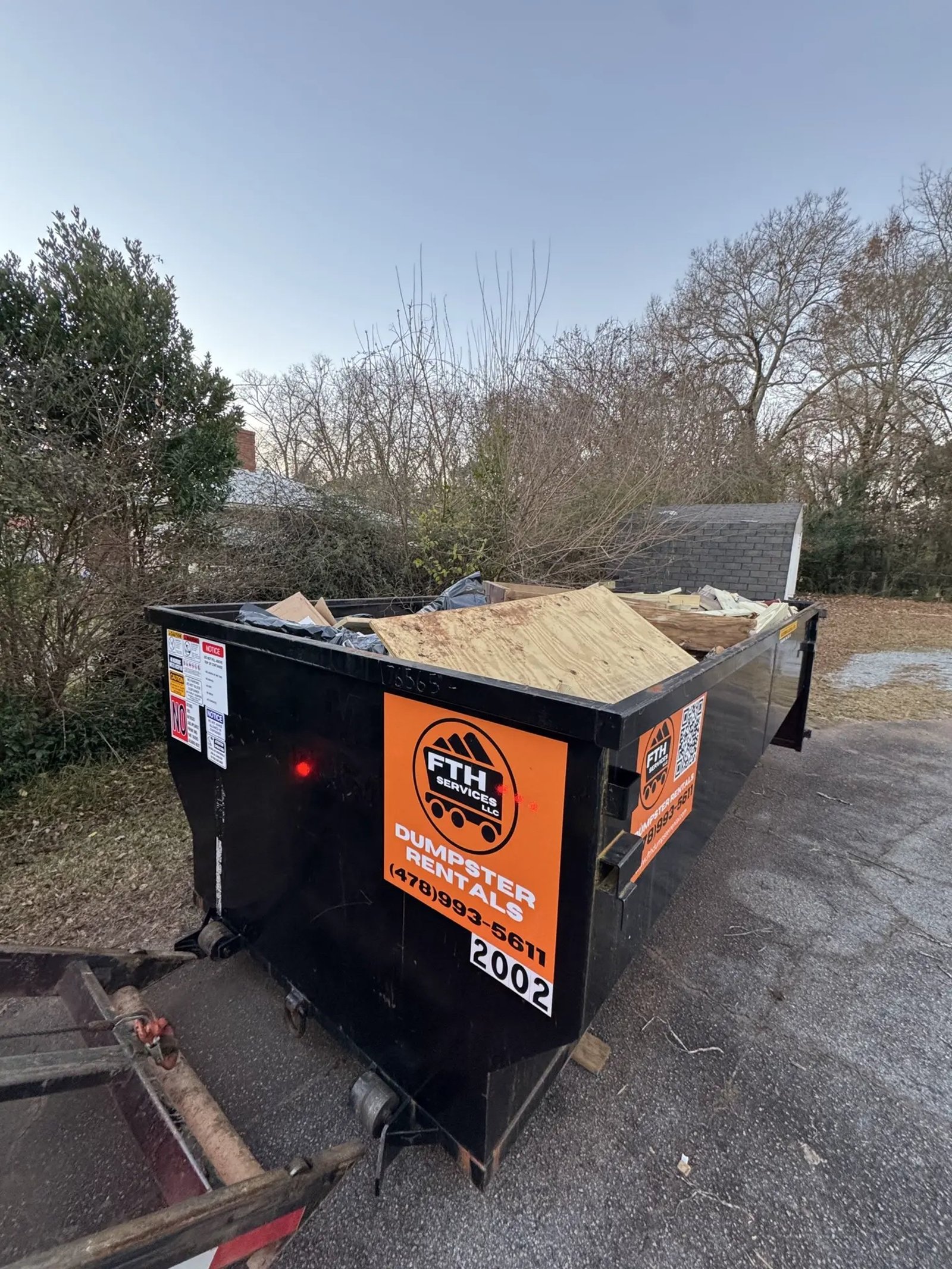
Wood and framing scraps
Dimensional lumber, trim, blocking, sheathing scraps, and general wood debris from repairs or construction.
Contractors and remodelers do not need a disposal surprise at pickup. Construction debris can be bulky, sharp, heavy, or restricted, and the weight can climb faster than the dumpster looks full.
FTH helps plan the container around the job: where crews will load, what material is coming out, whether shingles or dense debris are involved, and how to keep the load safe to haul. Wood, drywall, flooring, cabinets, trim, doors, fixtures, packaging, and general renovation waste are common. Roofing tear-offs are accepted; we do not accept concrete, dirt, brick, rock, or tree stumps in any dumpster.
Construction and remodeling debris should be planned by both volume and weight. Wood, trim, doors, cabinets, drywall, packaging, and flooring usually load well. However, shingles, tile, dense demolition debris, and wet material can reach the weight limit before the dumpster looks full.
Place heavier debris low and spread it across the floor of the container. Break down long material when practical, and keep sharp or awkward pieces inside the container walls. This helps keep the load safer for transport.
Concrete, dirt, brick, rock, heavy fill, and tree stumps are not accepted in standard dumpster rentals. For roofing tear-offs or unusually heavy projects, confirm the material and expected amount before loading.
Dimensional lumber, trim, blocking, sheathing scraps, and general wood debris from repairs or construction.
Drywall, insulation, ceiling material, and renovation debris. Wet material weighs more and should be planned carefully.
Kitchen cabinets, bathroom vanities, doors, casing, baseboard, shelving, and built-in removal debris.
Carpet, laminate, vinyl plank, wood flooring, tile, and underlayment. Tile and wet flooring can become heavy.
Shingles, underlayment, siding, gutters, flashing, and small exterior debris with proper weight planning.
Cardboard, wrap, fixtures, scrap material, and cleanup debris from contractor work.
Construction loads often include wood, drywall, flooring, cabinets, trim, doors, fixtures, packaging, and light demolition debris. Roofing shingles need proper weight planning. Concrete, dirt, brick, rock, and heavy fill are not accepted in standard roll-off dumpster rentals because they can exceed safe hauling limits and require a separate disposal plan.
Use these estimated weights for planning only. Standard rentals include 1 ton of disposal weight, and weight over the included amount is billed at $75 per ton, prorated.
| Common item or material | Typical planning weight | Dumpster planning note |
|---|---|---|
| Drywall | about 1.6–2.2 lb per square foot of 1/2-inch sheet | Wet drywall weighs more. Spread stacks low. |
| Carpet and padding | about 0.5–1.5 lb per square foot | Rain can make carpet much heavier. |
| Cabinet section | about 40–120 lb each | Break down when practical. |
| Interior door | about 20–80 lb each | Flat items load well low or along the side wall. |
| Architectural shingles | about 250–400 lb per roofing square | Plan roofing debris carefully because weight builds quickly. |
| Plywood sheet | about 45–75 lb per 4×8 sheet | Water-damaged wood may weigh more. |
| Dimensional lumber | varies by length and moisture | Cut long pieces so they stay below the rim. |
| Tile and thinset | heavy by volume | Call before loading large tile or dense demolition debris. |
| Cabinets and vanities | about 40–150 lb each | Break down when safe and spread dense pieces low. |
| Siding and trim | bulky more than heavy | Keep long pieces inside the container below the rim. |
These are planning estimates only. Actual scale weight varies by size, moisture, material density, brand, construction method, and how the load is packed. FTH Services uses disposal facility weight tickets for final billing when overage applies.
Good for small repair jobs, limited demolition, flooring, trim, and compact renovation debris.
Useful for bathroom remodels, small kitchen work, drywall, cabinets, and contractor cleanup on tighter jobsites.
Best for larger remodels, bulky construction debris, roofing tear-offs, and cleanup where crews need more loading room.
Place the dumpster where crews can load efficiently without blocking work vehicles, public access, utility areas, or the truck route needed for pickup.
Spread heavy debris evenly across the container floor. Do not load prohibited heavy fill, and do not fill the dumpster by volume alone because weight limits can be reached before the container looks full.
Keep all debris below the top rail, avoid hanging material over the sides, and do not load prohibited items or material that could make the container unsafe to haul.
Construction dumpster debris commonly includes drywall, wood, trim, flooring, cabinets, doors, fixtures, packaging, and light demolition debris. Heavy fill such as concrete, dirt, brick, and rock is not accepted.
Construction cleanup usually works best with a 15 or 20 yard dumpster because debris can be bulky, awkward, and heavier than normal household clutter.
Construction debris should be loaded with dense material low, weight spread evenly, all debris below the top rail, and prohibited material kept out.
These blog articles support this service with practical loading, cost, and planning guidance.