
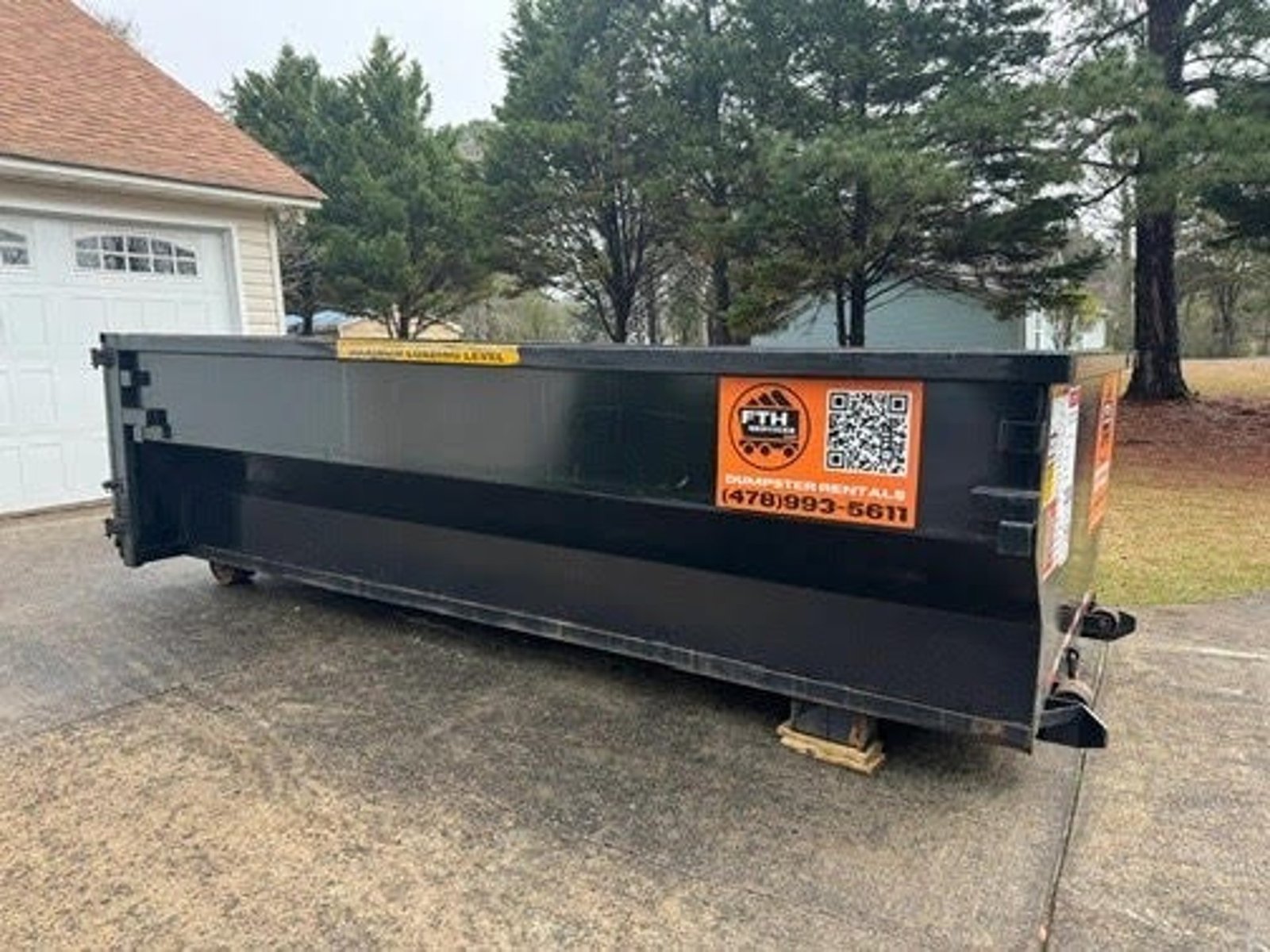
Every FTH Services rental includes 1 ton of disposal weight, with a 5-ton maximum per dumpster. Weight over 1 ton is billed at $75 per ton prorated, and extra days are $15 per day. Posted prices are $280 for a 12-yard, $310 for a 15-yard, and $340 for a 20-yard dumpster, including delivery, pickup, 7 days, and 1 ton. Book online or call or text (478) 993-5611.
What Included Disposal Weight Means
One ton equals 2,000 pounds of disposal weight. The included allowance for each dumpster is shown in the current price chart before prorated overage applies.
The dumpster is weighed at disposal, and the final scale weight determines whether the load stays within the included amount or creates overage. Volume and weight are not the same thing. A dumpster can look half full and still be heavy if it contains shingles, wet debris, books, tile, flooring, tools, or demolition material. A bulky furniture load may fill the container first, while a dense roofing or remodeling load may reach the weight limit first.
Use the posted included weight as the starting allowance for normal cleanup material, then plan ahead if the project includes dense, wet, or construction-related debris.
How Included Disposal Weight Works
Each rental includes the disposal weight shown for the selected size. Disposal is measured by scale weight. Weight above the included amount is billed at $75 per ton, prorated. Review the selected size’s rental terms before booking.
What Makes a Load Heavy
Water and Rain
Wet carpet, wet mattresses, soaked boxes, drywall, clothing, insulation, cardboard, and yard debris can weigh far more after rain.
Roofing and Remodeling
Shingles, tile, flooring, drywall, cabinets, TPO insulation, built-up roofing, and dense demolition material can reach the included weight quickly.
Dense Material
Concrete, dirt, brick, rock, heavy fill, and tree stumps are not accepted in standard FTH dumpster rentals because the weight can exceed safe hauling limits.
How to Estimate Weight Before You Book
Look at the type of material, not just how much space it takes up. Bulky furniture fills space. Shingles, wet debris, books, tools, tile, cabinets, carpet, drywall, and demolition debris add weight.
Load heavy material low and spread it across the floor. Keep absorbent debris dry when practical and ask before loading anything unusually dense. For item-level planning, read the debris weight estimating guide before you book.
How Overage Billing Works
Weight over the included amount is billed at $75 per ton, prorated. Because overage is prorated, a customer who goes slightly over only pays for the actual extra weight instead of a full additional ton.
What Customers Say About Clear Weight and Cost Details
Customers often mention clear pricing, responsive communication, careful placement, and dependable pickup.
“Excellent service! Dropped off and picked up with no issues. Transparent on costs. No hidden fees.”— Jesse V.
“Excellent service and communication.”— Eddie R.
Dumpster Weight FAQs
What happens if I go over a ton?
Dumpster material over the included weight is billed at $75 per ton, prorated based on the disposal weight.
How do I avoid weight overage?
Keep heavy material low, spread dense debris evenly, protect absorbent material from rain when practical, and ask before loading shingles, tile, wet debris, books, tools, or unusually dense material.
Why is concrete not allowed?
Concrete is too dense for a standard FTH dumpster rental and can exceed safe hauling limits quickly.